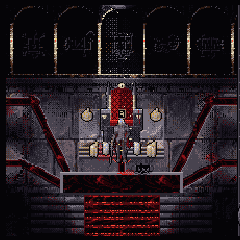
A boy slept by the vats of a chandlery in the gutter of a city built on a hill. The gang who owned him named him for the part of the candle that burns. A priest bought him from the gang. A duchess bought him a name. Six great houses shut their doors on him, one after another, and then the heads of those six houses killed him on a stone.
That is where the game begins: in the dark, in the earth, with a voice.
Do not reach for air. There is none, and you have no need of it. You are dead.
The title of this book
The church keeps lives of its saints: the story of a holy man set down for the faithful, from his humble birth to his good death. The Life of the Blessed Hand is one of them, and the church’s name for Wick is the Blessed Hand. The scroll that opens the game is that life, panel by panel, in red and black ink, and the voice below reads it over his body.
So the title of this book is the church’s title. For now, read it as the church means it: a saint’s life. By the end you will read it differently. The page that says how is sealed at the end of this chapter.
The world in one breath
Væ Victis takes its name from an old Latin cry: woe to the conquered. The conquered here are not soldiers. They are the gutter, the marsh villages, the foundlings, the debtors, the sons marched up a hill to serve: everyone the great houses take from. And, the game will suggest, they are also anyone denied their own death.
The world is one city and the land around it.
- The city on the hill is class made into stone. The gutter lies by the river, outside the wall, lowest of all. The great houses sit on the rings above it, each higher than the last, and the crown sits on the summit.
- The church stands over everything, sincere and warm: a rose window, feast days, processions, an orphanage run as charity.
- Six great houses rule. Each takes something from the villages below: sons, infants, voices, men, years, bread.
- Beneath it all there is a hall under the cathedral, and rivers of blood that run into it, and something older that speaks.
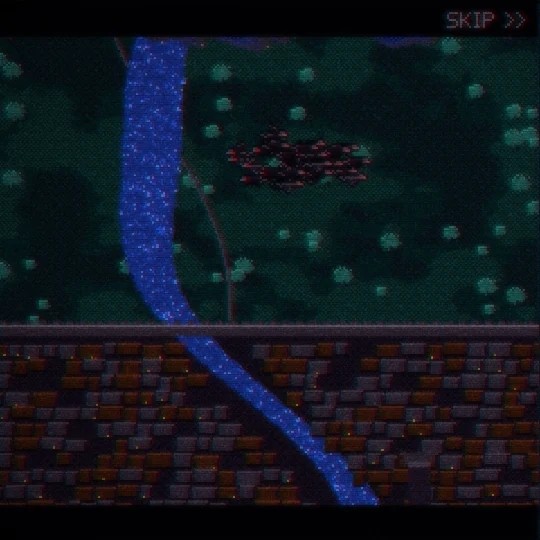
There is no clock in this world and no day and night to manage. Light is scenery. Time passes in deeds: the city changes because of what you have done, and only because of that.
Who Wick is
He has three names, and who uses which tells you who is speaking.
| Name | Who says it | What it means |
|---|---|---|
| Wick | the gutter, the villages, the dead, his mother, his one friend, the voice below | the gang’s name for him: the part of the candle meant to burn |
| Lord Aldric Marchmont | the houses, the watch, the high street | the title a duchess bought him: a lord’s name that was never meant to open a door |
| The Blessed Hand | the church | a name you will see written before you hear it said |
He wants one thing: to be inside. Past the doors that were shut on him, at the table, in the window. He believes he rose by his own will and that what he takes he has earned. His flaw is pride, and the game never lets it rest. He will not be led. He will not be told. He does not read what he is given.
He speaks in verse when he can: short, archaic, ending on the hard word. He never explains himself.
Here, where the lanterns gutter, I was slain;
the earth that took me could not keep its claim.
The voice below
Something raised him. The captions call it THE ONE BELOW, in gold, with an ember beside the name. It speaks to Wick and only to Wick, always as “you”. It is serious. It is sparing. It does not joke, it does not mock, and it does not laugh, anywhere in the game.
It also never lies. When it will not tell you something, it says less, or it is cut off. Keep that rule in your pocket: it is the most useful thing in this book.
In the grave, before he has opened his eyes, it offers him the strength to pull all six houses down, and it starts to name a price. He does not let it finish.
I am the one below. I can give you the strength to pull all six houses down. They will kneel to you and ask for the blow. Hear the price-
Enough. Open it.
Listen to that exchange twice. Everything in the game is in it.
What the game tells you at the start
After the opening scroll, or in its place if you skip it, the game shows three sentences on black. They are the plainest statement of the premise you will get:
They wore the Church’s robes. They bought an orphan, ruined his life on purpose, and killed him on a stone. The one below raised him for revenge.
So Wick wakes on a throne in a drowned hall under the cathedral, climbs up through his own grave, and goes to put out the six houses, one by one. Six candles burn at his grave, one for each house still standing. When a house falls, its flame goes out.
The one button
Every head of a great house fights Wick at full strength. Every one of them, beaten, kneels and asks for the killing blow, aloud, in words a proud man can hear as mockery.
Then the game hands you the only choice that matters in it. Hold the strike and the blow falls: the head dies, Wick takes a gift from below, and the house’s people are freed. Walk away, or lead the beaten head off by the hand, and the head lives: ruined, in the pillory in the market square, to be tried by the city’s council.
Kill or spare. That is the game’s lever, offered again at every house, and the world keeps count of what you chose.
- Read the candles. The six candles in the status panel and at his grave are the houses standing. They are the game’s clock, and the only one.
- Read the window. The rose window of the gutter church has seven lights. Watch what happens to them as houses fall.
- Read the square. The pillory in the market square has a stand for each house. Watch who sits in it.
- Listen to the thanks. When a head dies by Wick’s hand, listen to what they say. Then listen to the next one.
- Open the ledger (N, or LEDGER in the pause menu). Every story line lands there, written plainly. If you lose the thread, the thread is there.
Sealed · After the first houseWhat the first head’s thanks meansBreak the seal to read
After the first head dies by the held blow, the priest turns aside and says, to you and not to Wick:
You heard the thanks. Every head Wick kills goes below, and comes back to us as a saint.
Wick thinks this is his revenge. It is our rite, and he is doing it for us. I will not tell him.
From here the game plays with your knowledge against his. You know what each kill makes. Wick does not, and he will refuse to hear it every time the voice below tries to say it. The sentence a player tells a friend is this: the vampire revenge game where every lord you kill comes back as a saint, which is what they wanted, so the hardest button is the one you don’t press.
The world will show you the saints: the shrines, the white tabards, the faces re-leaded into the rose window. Sparing is the only way to deny a head the seat it paid for, and it costs Wick his gifts.
How the story is told
The game keeps nothing essential in item descriptions and asks you to dig for nothing you need. The surface story is said plainly, once, by a named speaker, and said again later for anyone who skipped the intro. Underneath it there is a mystery you can actually solve, and the game gives you every clue for it three different ways before the end.
It tells its story through:
- The voice below, plain about the facts, silent about itself.
- Wick’s answers. He answers the god at every mark, still and visit. He wins every exchange and loses the argument.
- The written record: a church calendar, a ledger, a bill of sale, a bounty bill, the faces on a wall. The player reads what Wick will not.
- Stills of scenes he is not in: a night he was asleep, a lord’s last evening, a council around an empty chair.
- The systems themselves: the candles, the window, the pillory, the rivers under the cathedral that thin as he acts.
Sealed · The endingThe one fixed truthBreak the seal to read
The mystery has exactly one answer, and it never changes: the houses engineered their own apparent ruin. They wanted it all along. They chose him. They want to die by his hand. It has happened before. Wick’s power is their harvest. The ending of the game is the moment Wick hears his own pride read back to him as the price. What he does then is up to you. The full account is in The Clues in Plain Sight and The One Below, under their gold seals.
What kind of game it is
A top-down gothic action game, drawn at 320 by 240 pixels in 32 colours, in which a dead man hunts his way through a city built by rank.
- The fights are lessons. Every boss teaches a pattern you can name afterwards, and nothing hits hard without a wind-up you could have read. A first-time player should win most fights in two to five tries. The Manual lists every tell.
- A house is a siege. You scout its ward, watch its public ceremony, break its grip on the villages, then climb to its rite. See The Rites.
- Death is a door. When Wick falls, the voice below brings him back to the last crypt he opened, with half his blood, and the world keeps everything he did. See Death and Its Cost.
- The road is guided, then open. The first part of the game leads you link by link, each place built on a new power; then the world opens and the order is yours. See the Walkthrough.
For streamers
The best moments in this game are the ones your chat does not see coming, so here is what to know without spoiling them.
- The intro is a scroll in red and black ink. Let it play on a first stream. It is short, and it carries the facts the whole story stands on. The skip is a held button.
- The first asking lands hard. Do not hold the strike on autopilot. Read the line on screen first.
- Wick’s voice is mostly captions. In play he speaks in subtitles, with a few defining lines heard aloud. The voice below is always heard. Keep captions on.
- Cinematics are short and skippable, and two of them frame every major place on the guided road. They are in-engine and safe to show.
- Count the candles on screen. It is the easiest way to tell your audience how far in you are.
Sealed · The endingHow the title reads at the endBreak the seal to read
A saint’s life is written after the saint is dead. This one was written before. The houses commissioned it; the church set down Wick’s whole life, his death and his future as a dead saint’s, and left the last panels bare for the ending they had not yet been given (whether the future panels are drawn on the opening scroll itself is still to be decided TBD). The Life of the Blessed Hand is the name of their plan, in their own hand: the beneficiaries wrote the prophecy, and the boy it was about was the only one who never read it. When the game ends, the bare panels are filled by what you choose. The book you are holding is the same life, with the margins written in.